
Parenting Tips
Quiet Games for Kids
Fourteen quiet games for kids that need little or no equipment, each with a note on which age in the two to five range it suits, and a calm place to sit when the house needs a slower hour.

Some afternoons call for something different from a toy box and a run around the yard. If you are looking for quiet games for kids that you can start on the spot, with the things already in the room, this list is for you. Each game below runs on a few props or none at all, and each one suits a slightly different child, so you can pick the one that matches the mood of the day rather than the age on a chart.
We have written these for quiet games to play with kids between two and five, mostly indoors and often at the kitchen table or on the rug. Nothing here needs a screen, a special kit or a trip to the store. Many of them are quiet games for kids at home that an older sibling, a grandparent or a calm fifteen minutes after lunch can host without any preparing.
Throughout the list we point out where a game tends to land for a child who can already do one thing. Those notes are observations you can check against your own child, not targets to reach.
Why quiet games work for calm
Quiet games for kids tend to do two jobs at once. They give a child something to do that holds attention, and they bring the volume of the room down without an argument about it. A game with a simple rule, like copying a sound or waiting your turn, invites everyone to slow down and listen, and the calm usually arrives before anyone notices it.
They are also easy to end. A game has a boundary that an activity sometimes lacks, so when the round is over a child has a natural place to stop.
If your child has finished the games and is ready to settle even further, the wind-down ideas in our guide on calm down activities for preschoolers pick up where a game leaves off.
Quiet games for toddlers
Toddlers are usually happiest with a game whose rules are one step long and whose success is obvious. Look for games with a big open move or a clear sound. These three sit at the younger end of the list.
- Whisper the word. You whisper a short word or animal name into your child's ear, and they whisper it back to you, or pass it on to the next person in the room. The rule is just to say it quietly, and the fun comes from leaning in close to hear. If your child can already repeat a word back to you, this suits them now. If they can already pass a whisper to a third person, add a listener and let the message travel around the circle.
- Where is the bell. Place a small bell or a set of keys in the middle of the rug, cover it with a cloth, and then lift the cloth together and make the sound once. Each child takes a turn making the sound while everyone else closes their eyes and points to where it came from. If your child can already point at a sound after it stops, this suits them. Use a bell that is larger than a choking-size toy and keep it out of the mouth: small objects of any kind need an adult in the room, and tiny bells or beads are a swallowing hazard.
- Hand the sound around. Hold a soft toy and make a gentle sound, such as a hum or a soft knock, then pass the toy to the next child, who makes a sound of their own before passing it on. The game is simply to take a turn and hand it along. If your child can already wait for a turn with a hand held out for the toy, this suits them. If they can already repeat the sound they just heard, add a rule that the next sound must match.
Quiet games for preschoolers
Preschoolers often enjoy a gentle challenge inside a game: a memory to hold or a pattern to spot. These four stretch a little further than the toddler ones while staying quiet and simple.
- Memory tray. Put four or five everyday objects on a tray, such as a spoon, a sock, a leaf and a toy. Let your child look for a short while, cover the tray, and then take one thing away. The reveal is the moment everyone is waiting for. If your child can already name most of the objects on the tray, this suits them. If they can already spot what is missing from a tray of four, add a fifth and a sixth, or swap one object for another rather than removing it.
- Simon says softly. Play a quiet version of the classic, where every instruction is said in a low voice and the actions are small, such as tapping your knees or pointing at the ceiling. The game is to follow only the command that starts with "Simon says". If your child can already follow a two-step instruction, this suits them. If they can already catch the trick, give them a turn as Simon.
- I spy with colors. Take turns naming something in the room by its color, in a soft voice, and the other players look around and point at it. The slower the guess, the quieter it stays. If your child can already name a few colors, this suits them. If they can already guess a color from the room around them, let them lead and set the clues.
- Draw what I hum. Hum a short tune, or sing a line of a familiar song, and let your child draw anything the sound brings to mind. There is no right picture. If your child can already hold a crayon and make marks, this suits them. If they can already tell you what their drawing is, ask them to name it for you when the tune ends.
Quiet games to play with kids at the table
These are the games that work well once everyone has settled into a chair. They need a little table space, and most of them suit two players, which makes them good when one adult is looking after two children.
- Hide the button. Hide a large button or a wooden token in your closed hands behind your back, bring both fists forward, and let your child guess which hand holds it. Then swap roles. The turn-taking is the game. If your child can already choose between two closed hands, this suits them. Use a large button and keep it away from the mouth, since small objects are a choking risk and need an adult watching. If your child can already guess correctly most of the time, hide the token under one of three cups on the table instead.
- Draw a line to a friend. Each player draws one line on a shared sheet, taking turns, and together you build a picture from nothing but the lines. The game is to keep going without preparing anything. If your child can already hold a crayon and draw a line, this suits them. If they can already join a line to another line, suggest a rule that a new line must touch an old one.
- Copy my rhythm. Clap a short pattern with your hands, or tap it on the table, and your child copies it back. Start with two beats and grow. If your child can already copy two taps in a row, this suits them. If they can already echo four or five taps, let them make up a pattern for you to copy.
Quiet games for kids no equipment needed
The best quiet games with no equipment rely only on voices and hands. Keep them in mind for a waiting room or a car ride.
- The silent game. Everyone agrees on a short time, maybe one minute, and the challenge is to stay silent and still until it is over. A small shake of the heads is allowed; a laugh usually ends the round. If your child can already understand "wait until the timer goes", this suits them. If they can already last a full minute, make the next round a little longer and let your child start the minute.
- Guess the animal. Describe an animal in a quiet voice through its sounds and habits, such as a long neck and a leaf for lunch, and let the others guess. Then let each child have a turn. If your child can already name a handful of animals, this suits them. If they can already give a clue of their own, let them lead the round.
Silent games for kids and quiet time games
Silent games for kids suit a room that needs almost no sound, such as a baby one room away. Each game below works as a quiet time game for kids in the middle of the day, with no talking.
Four games suit ages two to five.
- Freeze without a word. Hum a line of a quiet song and let everyone move around until the sound stops. When it stops, each child freezes in place and holds still until the humming returns. If your child can already stop and hold a pose on a cue, this suits them. If they can already hold still through a whole song, let them hum the next round.
- Shadow me. You move slowly in a small space, one arm up, then one knee bent, and your child copies the pose without asking any questions. The game is in the copying, not in the speed. If your child can already copy a pose they see, this suits them. If they can already copy two poses in a row, swap and let them lead.
- Follow the hands only. Give each instruction with your hands alone, such as pointing to a chair or tapping your head, and let your child do what they see. If your child can already follow a point to an object, this suits them. If they can already read a simple mime, add a second step.
- Pantomime the animal. Each child picks an animal and acts it out in silence while the others guess, and nothing is spoken until the guess. If your child can already act out an idea with their body, this suits them. If they can already hold a shape while others watch, let them act a second animal in turn.
If a child finds silence hard for a whole round, start with one minute and stop there however the round went.
Relaxing games for kids at the end of the day
When the house needs to slow down, a gentle game is often easier than a request to be quiet. Both of these work best in a dim room before dinner or the bath.
- Blow a slow cloud. Give each child a small piece of cotton wool or a tissue and see how far it travels with one slow breath. The game is in the slowness rather than the distance. If your child can already blow out a candle, this suits them. Tissues and cotton wool are small enough to swallow, so keep the pieces in view and keep an adult close. If they can already make the piece float, try a slower count for each breath.
- Story from three words. Ask your child for three words, such as "moon", "coat" and "dog", and then spin a short, soft story with those three inside it. The slower and quieter the telling, the more relaxing it becomes. If your child can already offer a word when asked, this suits them. If they can already tell a story back, swap the roles and let them build the next one.
A calm game like these sits naturally in a quiet routine, and the calm games for kids that children come back to are usually the ones with the simplest rule. If you want a longer routine around the same idea, the plans in our guide to quiet time activities for 5 year olds and quiet time activities for 4 year olds add more options for older children in the range.
Quiet games for other ages
Children who are closer to two usually need the shortest rules and the most adult support, and our guide on quiet time activities for 3 year olds covers routines built for that stage. With a mixed group, start the youngest on a toddler game while an older child plays one from the table list beside them.
For a wider set of quiet ideas, quiet time activities for preschoolers collects the routines that sit across the whole preschool age, and our piece on calm down activities for preschoolers is the one to open when a game has to help a child settle rather than play.
How Bumi Lumi fits quiet games
Bumi Lumi: Kids Coloring Games is a coloring app for children aged 2 to 5.
The part that matters for a quiet afternoon is that the app works without internet, including in airplane mode, so a child who wants to color can open it when the games have run out. It fits best as one short option alongside the games above rather than as a replacement for them.

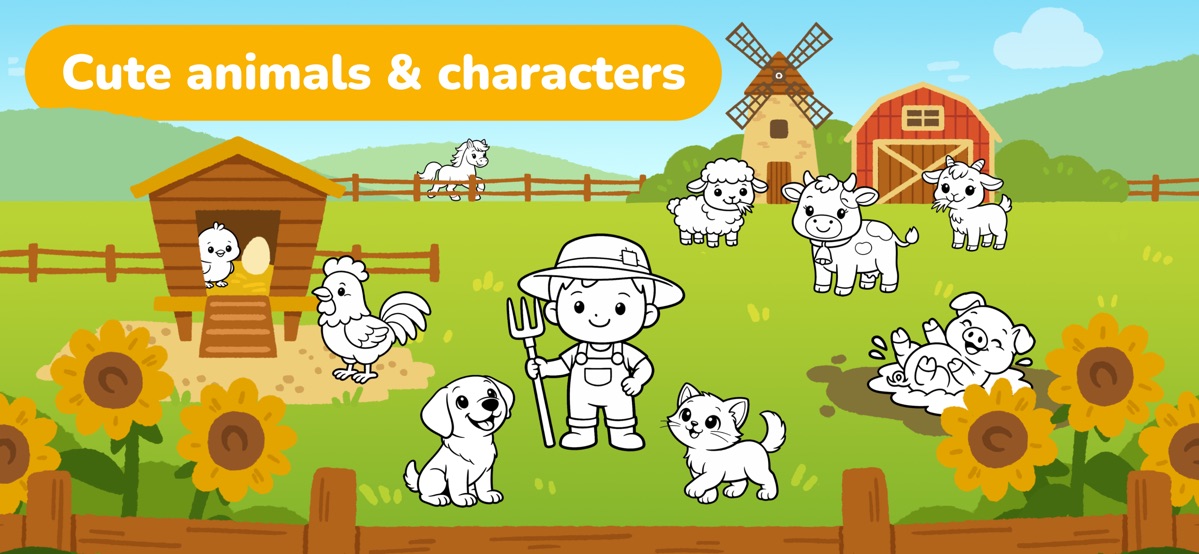
Explore Bumi Lumi on the App Store and Google Play.
Questions parents ask
What is a good quiet game for a two year old? Pick one with a single rule and a clear sound or movement, such as whisper the word or hand the sound around, and keep the turn short.
Can quiet games work for two children of different ages? Yes, pair a toddler game with a table game so each child has a role.
How long should a quiet game last? Start with two or three rounds and stop while it is still fun. A short game that ends well is easier to bring back tomorrow.
What do I do if the game gets loud? Say the next round will be played in whispers and demonstrate it yourself. A quiet voice in the room usually does more than a request to be quiet.
What is a silent game for a toddler? Pick one that uses the body rather than the voice, such as shadow me or freeze without a word, and keep it to a single round. A toddler who cannot hold still for long will often copy a pose more easily than a whisper.
Can a screen be part of a quiet game? In short doses, yes. A calm coloring app that opens with the Wi-Fi off fits an afternoon alongside paper games, and our guide on how to choose safe screen time apps for toddlers covers what to check.
Start with one game
You do not need fourteen quiet games for kids ready to go. Choose the one that needs nothing but your voice and play it once, and the next game is there when the first one has run its course.
Some afternoons will be too full for any of them, and that is fine. A single round is enough to turn a loud hour into a calm one.