
Parenting Tips
Quiet Time Activities for Preschoolers
Quiet time is the calm stretch of the afternoon when a preschooler who no longer naps plays in one spot and you get to sit down.

The afternoon nap fades at some point in the preschool years, on its own schedule for every child, and it rarely goes quietly. One week your preschooler sleeps an hour and a half, the next they are wide awake at the same hour and still need the rest the nap used to give them. Quiet time is what fills that gap: a calm, low-key stretch in one spot while the rest of the day catches up.
The guide below is for parents of three to five year olds who have outgrown the nap but not the need for a break. It covers how to set up a quiet hour at home, what to put in it, and what to do on the days your child will not rest.
The hour the nap used to take
Quiet time is not a second attempt at sleep and it is not a punishment for being awake. It is a standing appointment in the afternoon where the pace drops, the lights stay soft, and your child plays in one place with no help from you.
The framing you use decides how the first week goes. Call it rest time or quiet time from the start, and say it the same way every day, so your preschooler hears a routine rather than a request. Explain the shape of it in one sentence: you play here quietly, the timer tells us when it is done, and after that we can go outside. A child who knows the ending is far less likely to argue with the middle.
The parent's part matters just as much. This is your own quiet stretch, not a chance to finish the laundry, because a parent who is visibly working beside a child who is meant to rest sends two different messages at once.
How to set up a quiet hour at home
Four moves do most of the work, and none of them take long.
Pick one spot and keep it. A cushion in the corner, a small rug beside your chair, the end of the couch: the place does not matter, the sameness does. When the same corner is quiet time every day, your preschooler stops negotiating about where to be and just goes there.
Use a timer your child can watch. A preschooler cannot reliably read a clock but can watch a color wheel or a sand timer empty. The timer, not you, decides when quiet time ends, which takes the argument out of your hands entirely.
Offer two or three choices, not a shelf. A wall of options turns quiet time into a decision, and a decision turns into a negotiation. Lay out two things before you sit down and let your child pick between them. For the child who is ready for a longer project, quiet time activities for 4 year olds is the next step up.
Start shorter than you think. Ten quiet minutes you can repeat tomorrow are worth more than forty that end in a standoff. Once ten minutes feels ordinary, add five, and let it grow from there. For the days the feeling arrives before the rest does, a calm down corner is the same idea for the harder hour.
Quiet activities for the preschool nap time
These all work alone, in one spot, and none of them ask a preschooler to sit still and silent for a long stretch.
- Water painting: a brush, a little water and a reusable pad, and the color fades back to blank so the page resets itself.
- Felt boards and flannel scenes: soft shapes press onto a fuzzy surface and stay put, and the picture can be rebuilt as many times as your child likes.
- Simple puzzles with chunky pieces and one clear picture, which give an obvious finish line.
- Threading beads or lacing cards, where the repetitive motion does the calming instead of you.
- Sticker scenes on a blank page, since peeling and placing keeps small hands busy for longer than it looks.
- Wordless picture books, which let a child who cannot read follow a story alone.
- Audio stories at low volume from a speaker, which give quiet company without a glowing screen.
- A small basket of soft, familiar items kept only for quiet time, so there is no question about what comes next.
- Magnetic tiles or chunky blocks with a small build card, which give a quiet goal to reach.
- Drawing with paper and a few fat crayons, which has no wrong answer and therefore holds attention.
Beads and other small pieces are for the times when an adult is right there with you, so keep that one for the days you can sit close.
If quiet time has to happen on a screen, the same rules apply: calm, contained, and something your preschooler can drive without you. A tap-to-fill coloring app fits that shape, and our guide on mess free coloring for toddlers covers the cleaner side of the same choice.
When your preschooler will not rest
Some children take to quiet time in a week, and others push back every afternoon for a month. Both are ordinary, and neither means the routine is wrong.
If your child will not stay in the spot, sit with them at first. Bring your own quiet task, stay in the room, and let them check in as often as they need. Then fade: sit farther away, then at the edge of the room, then in the next room with the door open, over a couple of weeks rather than overnight.
If the afternoons feel raw rather than restless, shorten quiet time rather than cancel it. Five minutes that hold the habit are worth more than a thirty minute standoff you both remember.
And if your preschooler is genuinely exhausted and asks to lie down, let them. Quiet time is not the enemy of sleep, it is simply what the afternoon holds when sleep does not come.
How Bumi Lumi fits a quiet afternoon
For the days when quiet time lands on a screen, Bumi Lumi: Kids Coloring Games is a coloring app for children aged 2 to 5.

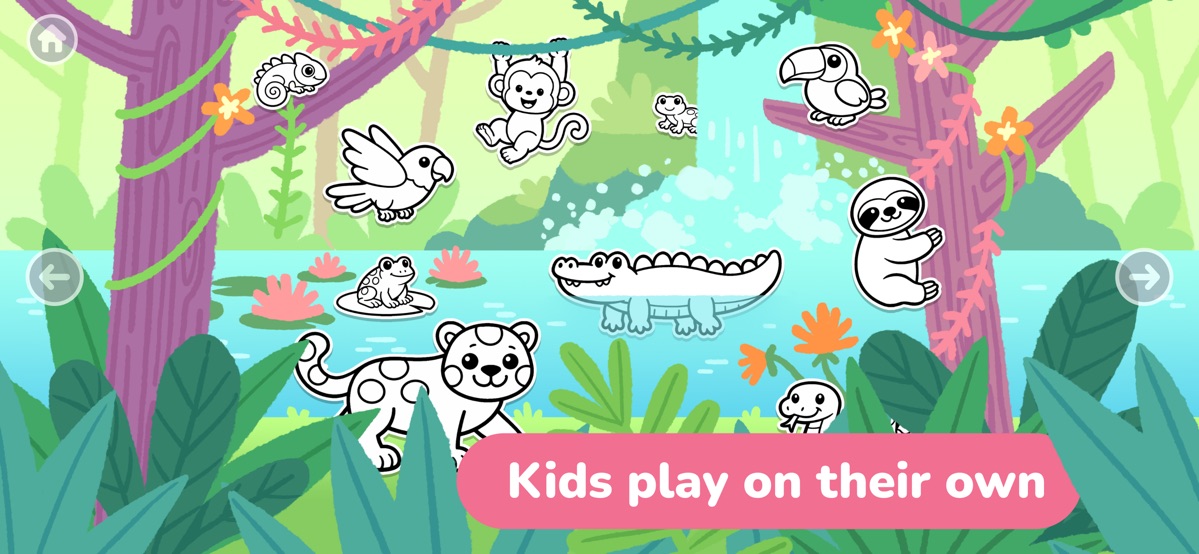
The part that helps at home is the offline one: it works without internet, including airplane mode, so it is there whether the Wi-Fi is up or not. You can read more of the setup in our guide on how to keep toddlers busy at home, and if you are sorting out what a younger sibling can manage, our piece on what age toddlers can use coloring apps covers the age question.
Explore Bumi Lumi on the App Store and Google Play.
Quiet time across the preschool years
The length changes with the child, and the shape stays the same. Start short, with one choice and a timer they can watch, and grow it when the current length feels ordinary. The number is your child's, not the calendar's.
If you are setting this up for a younger child who still naps most days, our guide on quiet time activities for 3 year olds takes the same routine down to the shorter version.
Questions parents ask
How long should quiet time be for a preschooler? Begin at ten minutes and add five once that length feels settled, because a short quiet time your child repeats daily beats a long one that ends in tears.
What if my preschooler refuses quiet time entirely? Keep the slot and the spot even if the minutes shrink, since the routine is what your child is learning, not the length.
Is it fine if quiet time is on a screen? In small, calm doses, yes, and an offline coloring app that a child can drive alone fits the shape better than a fast game. Our piece on passive and active screen time covers that side in more detail.
The quiet hour is for both of you
Quiet time is less about keeping a preschooler busy and more about protecting a small pause in the middle of a long afternoon, for your child and for you.
You do not need a perfect list. You need one spot, a timer that ends the session, and two things your child can reach for on their own. Some days it lasts four minutes and ends in a sigh, and that is still a quiet time you get to try again tomorrow.